Local business news, practical guides & a trusted directory — Los Angeles · Tijuana · Los Algodones
Los Angeles · Concrete
Mastering Concrete Drying Times in Panorama City, CA: A Homeowner’s Guide
For property owners in Panorama City, CA, understanding the nuances of concrete drying and curing is far more critical than simply waiting for a surface to…
By the Regional Newsroom · November 14, 2026 ·
Updated on November 14, 2026 ·
Featuring Royal Concrete Works, Panorama City
Photo: Royal Concrete Works
For property owners in Panorama City, CA, understanding the nuances of concrete drying and curing is far more critical than simply waiting for a surface to appear solid. Rushing the process or misjudging its progress can lead to significant structural weaknesses, cosmetic flaws, and costly repairs down the line. Many homeowners mistakenly believe that ‘dry’ concrete is ‘cured’ concrete, but these are distinct stages with different implications for durability and load-bearing capacity. Recognizing these differences, especially within our local climate, is paramount to ensuring the longevity and performance of any concrete installation, from a new patio to a driveway extension.
The local environment of Panorama City, with its distinct temperature fluctuations and humidity levels, plays a substantial role in how quickly concrete achieves its full strength. Neglecting these environmental influences can compromise the integrity of freshly poured concrete, leading to issues like cracking, dusting, or reduced compressive strength. This guide aims to demystify the process, offering homeowners clear insights into the technical aspects of concrete drying and curing, empowering them to make informed decisions and appreciate the professional care required for optimal results.
Understanding the Hydration Process: How Concrete Achieves Strength
The question of ‘how long does concrete take to dry’ is fundamentally about understanding the chemical reaction known as hydration, not merely evaporation. When water is mixed with cement, it initiates a chemical bond that forms a crystalline structure, binding the aggregate particles together. This process consumes the water, gradually transforming the liquid mixture into a solid, durable material. The initial set, where the concrete loses its plasticity, can occur within a few hours, but this is just the beginning. True strength development, or curing, continues for weeks, even months, as the hydration process progresses deep within the slab, making the concrete denser and more robust over time.
Various factors influence the rate and completeness of this hydration. The water-to-cement ratio is critical; too much water weakens the final product, while too little can prevent full hydration. Temperature also plays a significant role: warmer conditions generally accelerate hydration, while colder temperatures slow it down considerably. Proper curing practices, which involve maintaining adequate moisture and temperature, are essential to allow the cement particles to fully react with the water, maximizing the concrete’s potential strength and minimizing the risk of surface defects like shrinkage cracks or dusting.
Local Climate Impacts: Concrete Drying in Panorama City, CA
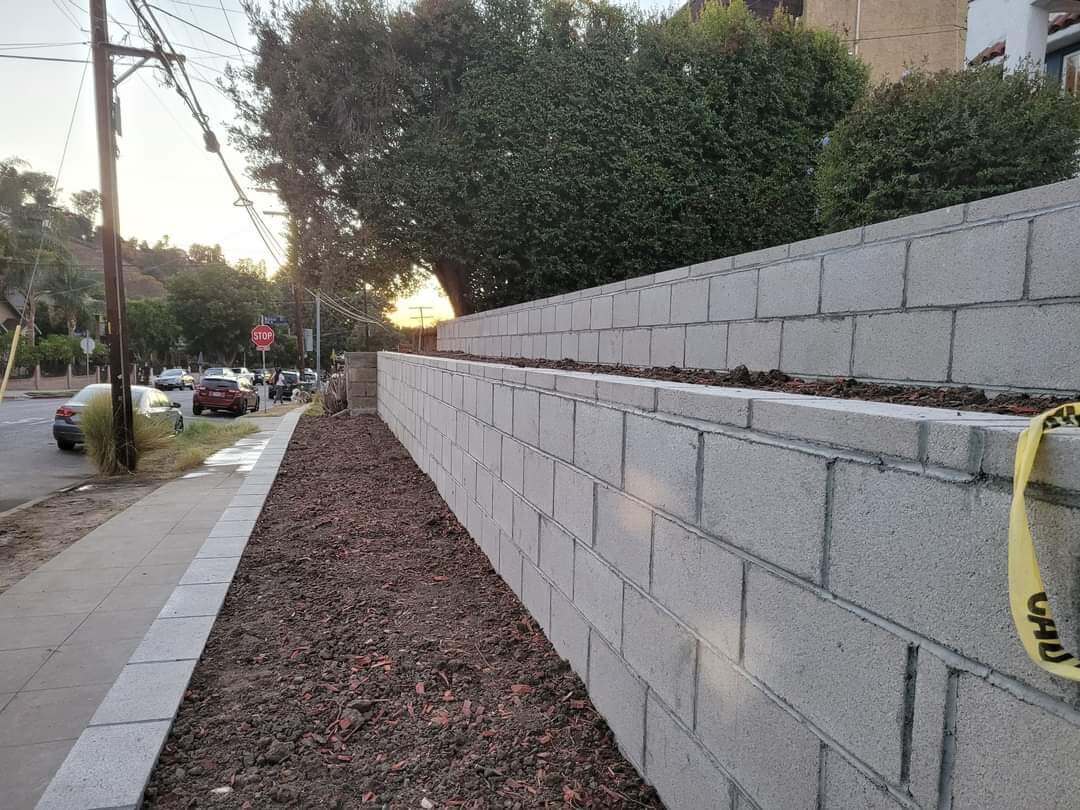
Retaining Wall Royal concrete Works
The specific environmental conditions in Panorama City, CA, profoundly influence how long concrete takes to dry and cure. Our region experiences warm, dry summers and mild, sometimes wetter, winters. During the hotter months, high temperatures can accelerate the initial drying of the concrete surface, but this rapid evaporation can lead to premature surface cracking if not properly managed. Conversely, the cooler, occasionally damp conditions of winter slow down the hydration process, extending the overall curing time required to reach optimal strength.
Humidity levels also play a significant role. Low humidity, common during our dry season, can pull moisture out of the concrete too quickly, hindering proper hydration and potentially leading to a weaker, less durable surface. Professionals in Panorama City must account for these variables, employing specific curing techniques such as applying curing compounds, wet curing, or covering the concrete to maintain consistent moisture and temperature. These measures ensure that the concrete hydrates effectively, regardless of the fluctuating local climate, ultimately leading to a stronger, more resilient installation that can withstand the test of time and local conditions.
Professional Concrete Curing: Methodology for Optimal Results
When professional contractors approach a concrete project, ensuring proper drying and curing is a meticulously planned process, not a casual waiting game. The methodology begins immediately after the concrete is poured and finished. Experts understand that simply letting concrete ‘air dry’ is insufficient for achieving its full potential strength and durability. Instead, they employ various techniques designed to control the moisture content and temperature of the concrete, facilitating the complete hydration of the cement. This controlled environment is critical for preventing issues like surface dusting, scaling, and premature cracking, which can compromise the long-term integrity of the slab.
Key professional methods include wet curing, where the concrete is kept continuously damp for an extended period, or applying specialized curing compounds that seal the surface to retain internal moisture. For projects requiring specific performance characteristics, such as high-strength driveways or industrial floors, professionals might also monitor the concrete’s internal temperature and humidity to ensure optimal conditions are maintained. Understanding these precise methods and their application is why a professional assessment is invaluable for any concrete project. Concrete Contractor in Panorama City This expert approach guarantees that the concrete reaches its intended strength and aesthetic quality, providing a lasting and reliable surface for years to come.
Best Practices for Long-Term Concrete Integrity and Care
Ensuring the long-term integrity of your concrete installation in Panorama City extends beyond the initial drying and curing phases. Property owners should adopt several best practices to maintain their concrete’s durability and appearance for decades. One critical aspect is understanding that while concrete may feel hard after a few days, it continues to gain strength for weeks. Therefore, avoiding heavy loads or abrasive activities on new concrete for at least a week, and ideally longer, is crucial. This patience allows the hydration process to progress substantially, preventing early damage that could compromise its ultimate strength.
Regular inspection and proactive care are also vital. While concrete is robust, it’s not impervious to wear. Promptly addressing any minor surface issues, such as small cracks or stains, can prevent them from escalating into more significant problems. Protecting concrete from extreme temperature swings, especially during its early life, and ensuring proper drainage around slabs will also contribute to its longevity. Consulting with concrete specialists for periodic assessments can identify potential vulnerabilities early, allowing for timely interventions and ensuring your concrete surfaces remain functional and aesthetically pleasing for the lifespan of your property.
Frequently Asked Questions
How long until concrete is walkable after pouring?
Generally, concrete can be walked on within 24 to 48 hours, depending on the mix and environmental conditions. However, this is just for light foot traffic. Full strength for heavy use takes much longer, typically several weeks for complete curing.
What factors affect concrete drying time in Panorama City?
In Panorama City, factors like temperature, humidity, concrete mix design, and slab thickness significantly impact drying time. Hot, dry weather can accelerate surface drying but may hinder full internal curing if not properly managed with professional techniques.
Can I speed up concrete drying without professional help?
Attempting to artificially speed up concrete drying without professional knowledge can lead to weaker concrete, cracking, or dusting. It’s crucial to allow the natural hydration process to occur under controlled conditions for optimal strength and durability.
When is concrete considered fully cured for vehicle traffic?
For vehicle traffic, concrete typically needs to cure for at least 7 days to reach about 70% of its compressive strength, with full strength often achieved around 28 days. Premature heavy loading can cause irreversible damage to the slab.
This story was originally published on the business's own website — Royal Concrete Works.
It is republished here with a canonical link to the original, so the original
article keeps its search ranking.
Automotive motor fluids, transmission oil, and hydraulic lubricants create severe aesthetic and chemical challenges when they penetrate residential and…
When you evaluate modern exterior surfaces for residential or commercial properties in Panorama City, CA, exposed aggregate concrete stands out as both an…
Knowing exactly when to pump septic tank installations is essential for protecting your property’s plumbing infrastructure, preserving soil absorption…